
When Your Caregiver Is Also Your Captor
What Serena and June Teach Us About Attachment Trauma
 We don’t need to be trapped in a dystopia to feel trapped by someone we once depended on.
In The Handmaid’s Tale, June and Serena’s relationship is often framed as a political or moral battleground. But beneath the drama of Gilead’s theocracy, there’s something more intimate at play—something that many trauma survivors recognize instantly. Their dynamic is eerily familiar to anyone who has grown up with a caregiver who shifted between cruelty and kindness, control and affection.
That kind of caregiving creates confusion. Fear. Shame. It leads to a specific kind of emotional wounding that researchers call disorganized attachment. And if you’ve ever been hurt by someone you depended on, and then blamed yourself for not being able to stop loving them, you may already know exactly what that means.
The Blueprint of Disorganized Attachment
Attachment theory tells us that we learn how relationships work from our earliest bonds, usually with our parents. When those bonds are safe, consistent, and emotionally attuned, we develop a secure attachment style. We learn that love doesn’t require self-erasure. That safety doesn’t depend on being perfect. That we’re allowed to have needs.
But when the person we rely on becomes unpredictable, loving one moment and threatening the next, our nervous system scrambles. That’s the hallmark of disorganized attachment. We want to move toward the caregiver for comfort, but at the same time, we flinch. We feel scared and soothed, often within the same interaction.
This creates a psychological double bind, and it’s the exact trap June falls into in her earliest days in the Waterford household.
Serena: A Caregiver and Captor
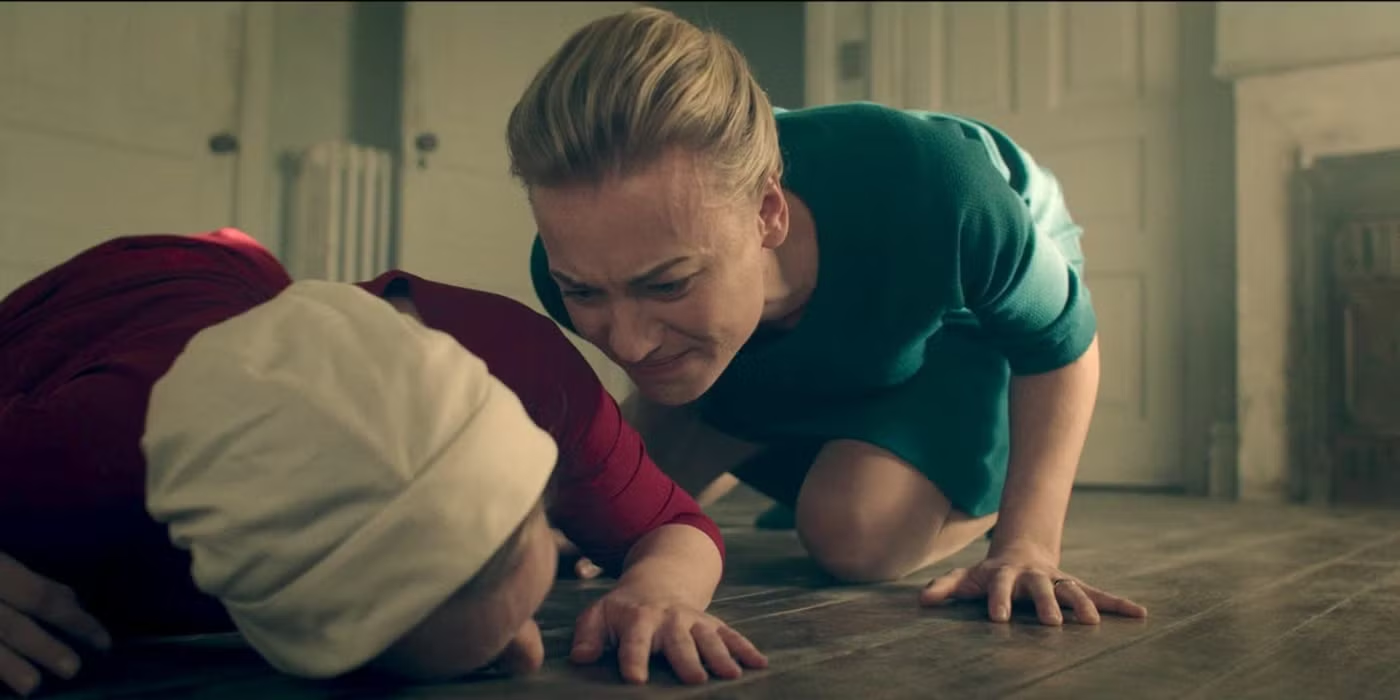 Serena Joy Waterford isn’t June’s mother. But the structure of their relationship mimics the parent-child dynamic in critical ways. June depends on her for food, clothing, and emotional safety. Serena sets the rules. She controls the consequences. She has all the power. [I think it’s no coincidence that the commander’s wives are consistently taller than their handmaids, reinforcing this unconscious connection for the viewer.]
And like many abusive or emotionally immature parents, she mixes brutality with brief flashes of connection.
 Serena arranges for June’s r@pe, justifying it with religious doctrine. Then she offers her a gift. Serena orders June’s silence, then shares a cigarette on the porch. She shoves her down the stairs one day and compliments her intelligence the next.
For viewers, Serena’s behavior is hard to pin down. For June, it’s traumatizing in a way that’s deeply personal. She’s not just being oppressed, she’s being psychologically groomed to seek connection from the very person who hurts her.
That’s what trauma bonding looks like. And in the real world, this dynamic shows up in homes across every demographic.
When the Same Person Hurts You and Holds You
 Children raised by unpredictable caregivers often say things like:
-
“She wasn’t always like that.”
-
“He apologized afterward, and then things were really good for a while.”
-
“I didn’t want to make things worse, so I tried to be extra good.”
This is the mental landscape of disorganized attachment. There’s no roadmap. No reliable cues. Just a child trying to earn love by learning the rules of a game that keep changing.
In Serena’s house, June becomes an expert at emotional reading. She watches Serena’s facial expressions like weather patterns, calculating when she can ask a question, when she should stay silent, and when she needs to protect herself.
Many of us did the same as children. We walked on eggshells. We minimized our pain or anger to keep the peace. We hoped that being “good” enough would win us safety. That skill helped us survive, but it also left us with wounds and habits that don’t go away easily.
Why Trauma Bonds Feel Like Love
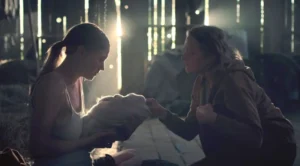 The human brain doesn’t separate love and survival very easily. When a person provides both, the bond is powerful, even when it’s deeply unhealthy.
June’s connection to Serena is complicated not because she forgets what Serena did, but because she remembers everything. She remembers the cruelty and the kindness. The betrayals and the brief human moments. That’s what makes walking away so hard.
For many adult survivors of childhood abuse, this echoes the heartbreak of confronting a parent later in life. You may still crave their approval or long for reconciliation, even when logic says you should stay far away.
It’s not weakness. It’s conditioning. When someone taught you that love is earned through performance or compliance, it makes sense that part of you still wants to “win” it, even years later.
The Final Season: The Grief of Being Unseen
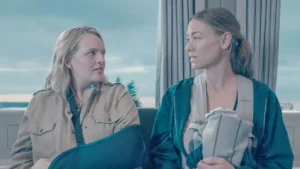 By the final season, Serena loses much of her power. She becomes a mother herself. She experiences vulnerability and fear. And in those moments, she turns to June, not as an enemy, but almost as a peer.
But here’s the thing: Serena never truly apologizes until the very end. She is just beginning to come to terms with the devastation she caused. For so long, she wanted something from June: support, forgiveness, maybe even friendship, but she couldn’t or wouldn’t acknowledge the depth of June’s pain.
This, too, mirrors real life.
Many adult children reach a point where they try to talk with their parents about past harm. They dream of contrition, acknowledgment, empathy, and accountability. What they often get instead is defensiveness, denial, or shallow remorse.
And when that happens, the grief cuts deeper than the original wound. Because what we really want isn’t revenge. We want to be seen. We want the person who hurt us to finally understand and care.
When throughout the first five, and most of the final, seasons Serena failed to meet June in that place, it’s not a dramatic twist. It’s a painfully familiar reality for trauma survivors.
From Disorganized Attachment to Heroism: How June Redefines Survival
 June’s heroine arc doesn’t unfold in spite of her trauma—it’s rooted in it. Her early helplessness reflects the painful reality of many trauma survivors: a learned belief that resistance is futile, that danger is inevitable, and that appeasement is the only path to survival. Psychologists call this learned helplessness, and it often develops alongside disorganized attachment.
But June doesn’t stay stuck.
She transforms the skills she used to survive, emotional attunement, strategic compliance, and self-restraint, into tools of resistance. Her ability to read Serena, modulate her own reactions, wait, and strike; these are trauma adaptations turned into revolutionary strategies.
June doesn’t emerge from Gilead unscathed or unbent. She emerges awake. And with that awareness, she begins to rewire her attachment style to include power, motherhood, and her own agency. She doesn’t magically “heal.” But she refuses to keep the chains on just because they feel familiar.
For so many of us with histories of attachment trauma, this is the deeper arc we crave: not just survival, but transformation. Not just escape, but meaningful change in how we relate to others, to our past, and to ourselves.
Final Thoughts
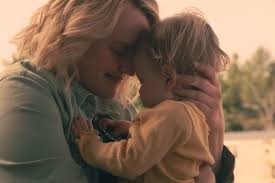 Serena and June’s relationship is fictional. But the pain it mirrors is very real.
Disorganized attachment isn’t a flaw; it’s an adaptation to impossible circumstances. Trauma bonds aren’t irrational; they’re survival mechanisms. And walking away from someone who once controlled you isn’t betrayal; it’s reclamation.
If you see yourself in this story, know this: you’re not alone. And your healing isn’t just about forgetting what happened. It’s about remembering who you are, separate from the person who tried to define you.
Call to Action:
If you’ve experienced this kind of emotional confusion in a relationship, whether with a parent, partner, or authority figure, and want help making sense of it, we’d be honored to support you. Reach out to explore therapy that honors your story and empowers your healing.

It's not an easy time to be a kid. Perhaps it never is, but now it's especially true. Let us help you understand and support your child's needs.

Is your teen struggling with school, in their relationships with friends, with you? Do they seem irritable, withdrawn, unmotivated, sad? Our therapist know how to help.

Are you looking to make some aspect of your otherwise good relationship better? Maybe you’ve tried all the strategies that make sense to you.