
What Netflix’s The Crash Reveals About the Real Cost of Permissive Parenting

From the Netflix documentary The Crash
If you’ve watched The Netflix series The Crash, you probably formed an opinion about Mackenzie Shirilla’s parents before the show even ended. Natalie and Steve Shirilla present themselves as fiercely devoted parents who unconditionally believe in their daughter. That devotion is visible and, in its way, genuine. The problem is that unconditional advocacy and effective parenting are not the same thing.
I want to be clear about what this is and isn’t. This is a criminal case, not a family therapy case, and I am not privy to anything beyond what the documentary shows. But as a clinical psychologist with a practice that has worked with adolescents and their families for more than two decades, some of what the Shirillas revealed in their interviews is worth exploring. Because these patterns are not unusual. We see versions of them in our office regularly, in families who love their children deeply yet still miss the mark on something their children fundamentally need from them.
What the Documentary Shows
 In July 2022, seventeen-year-old Mackenzie Shirilla drove her car into a brick wall at 100 miles per hour, killing her boyfriend Dominic Russo and their friend Davion Flanagan. Forensic black box data showed she never touched the brake. A Cuyahoga County judge convicted her of murder in 2023 and sentenced her to fifteen years to life. The Crash revisits the case and gives her parents their first extended platform to contest that verdict.
Steve Shirilla said plainly, on camera, that he had no problem with his 17-year-old daughter smoking marijuana. “If you’re going to smoke a drug,” he said, “that’s the one I believe you should take.” This was not a nuanced parental position with caveats. It did not show any insight into the effects of drugs on developing brains. It was simply, “I do it. It’s fine.”
At 17, Mackenzie was also living with her adult boyfriend, Dominic Russo, who was three years her senior. She had moved in with him in 2021, before she turned 18, in an arrangement her parents supported. She was, by multiple accounts, struggling in school during this period. Her relationship with Dominic was volatile and, according to trial testimony, video evidence, and court filings, often explosive on her side.
Through it all, her parents claimed that Mackenzie never lied to them. Natalie said in the documentary that Mackenzie “would never hurt them or anybody she loves,” and described her as someone who naturally stands up for people in trouble. Her father went further, contesting every account that conflicted with his picture of her. Her parents followed her on social media, with mom regularly liking her daughter’s posts that other adults found troubling or inappropriate
I don’t doubt they loved and believed in her. But they helped build the version of Mackenzie that did not serve her or her friends well.
What Laissez-Faire Parenting Actually Costs
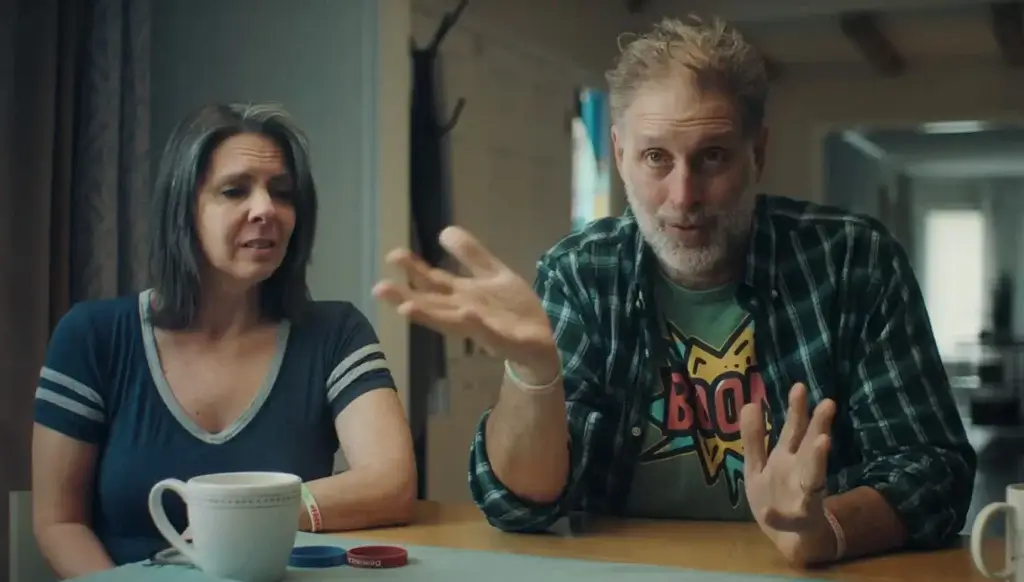
Natalie and Steve Shirilla in the Netflix documentary The Crash
Permissive parenting is often wrapped in the language of love. Parents who practice it often describe themselves as trusting their children, honoring their autonomy, and refusing to be controlling. These are good instincts, just taken too far.
Adolescent development research is consistent: teenagers need warmth and structure. These are not competing values. A parent who supplies love without accountability teaches a child that their choices and behavior carry no weight, that relationships can absorb anything, and that the adults in the room will always find a way to make you right. That is a developmental distortion with lasting consequences.
When a 17-year-old is failing in school, using marijuana regularly- including while driving, living with an adult boyfriend, and displaying a pattern of relational aggression in an unstable relationship, those are not adolescent quirks to respect. They are warning signs that call for engagement, not tolerance.
Reflexively believing your child, against teachers, against evidence, against the accounts of others, is misguided loyalty. It deprives your child of corrective feedback, which is one of a parent’s core functions. Children who are never wrong at home develop a brittle relationship with accountability in every other setting.
What Adolescents Actually Need
Children need warmth, encouragement, and the security that comes from being known and loved by their parents. None of that is in question here.
They also need limits and they need a parent who will clearly say that a given behavior is unacceptable and mean it. They need to experience adults who stay engaged even when the conversation is uncomfortable, who love them enough to hold them accountable. Structure is not punishment; it is information. It tells a young person that their choices matter, that they affect other people, and that the world will respond accordingly. When parents remove that feedback loop, they are not protecting their children from the world. They are leaving them unequipped to function in it.
Accountability, delivered with warmth, is one of the most loving things a parent can offer a teenager.
A Final Note
When I was in middle school, I had an experience that demonstrates this quite keenly. My math teacher walked into class announcing that he had spent the prior day after school cleaning off every single desk from pencil marks. He railed at the waste of his time and announced that going forward, there would be detentions for everyone who used their desk as a notepad. He then proceeded to walk around the room, handing out six detentions to people who had written on the desk the day before. I was one of those people. I didn’t know the term “ex post facto law”, but intuitively I knew it was unfair to receive a punishment for past behavior at the announcement of a “new rule “.

I came home emboldened by righteous indignation, anxious to tell my father about the injustice. He patiently heard me out with all the colorful details. When I finished, he paused a moment, looked at me square in the face, smiled, and asked: “Did you write on the desk?” I knew at that point I had lost him. He would not be marching into the principal’s office demanding exoneration. I was a bit ticked off at him at the time. But today I understand, and I see how he was right. Teaching a child to accept personal responsibility for their actions was a gift my father gave me, and it has served me well.
I am not suggesting that the Shirillas caused what happened on July 31, 2022. A judge decided the question of accountability and placed it squarely at Mackenzie’s feet. What I am saying is that the parenting patterns visible in The Crash are recognizable. They are common. And in most families, the consequences are subtler than in this case, but they are still real and show up eventually.
Dr. Elizabeth Carr is a licensed clinical psychologist and the founder of Kentlands Psychotherapy in Gaithersburg, Maryland, where she has practiced for more than two decades. She writes and speaks on mental health, practice ethics, and the forces shaping the field.

It's not an easy time to be a kid. Perhaps it never is, but now it's especially true. Let us help you understand and support your child's needs.

Is your teen struggling with school, in their relationships with friends, with you? Do they seem irritable, withdrawn, unmotivated, sad? Our therapist know how to help.

Are you looking to make some aspect of your otherwise good relationship better? Maybe you’ve tried all the strategies that make sense to you.