
Can AI Help Me Stay On Task?
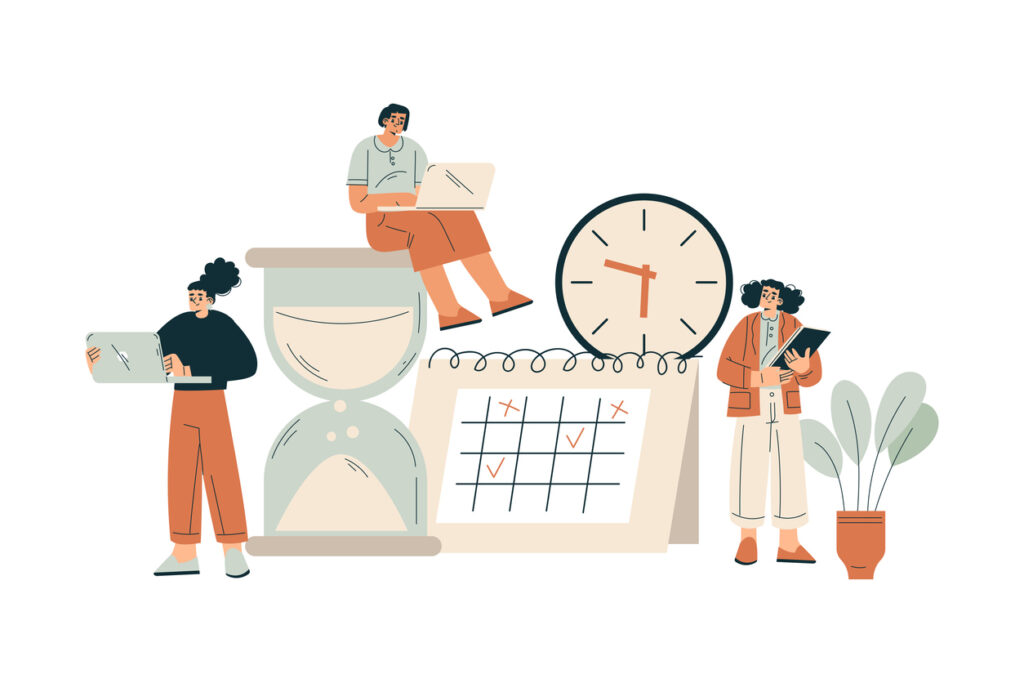
Many of us with ADHD, or even those with ADHD-like tendencies, are also creative and enthusiastic individuals who possess an incredible capacity to hyperfocus on projects we are passionate about—until we lose the thread.
Usually, it is because another of life’s demands requires us to shift gears, but for whatever reason, we must pause our momentum, risking stalling out and abandoning our passion projects.
For those of us with more ideas than hours in the day, this can be quite a challenge. I have found ChatGPT to be incredibly helpful in aiding me in noodling out solutions to complex business problems and offering guidance on their execution.
As a small business owner, I always have dozens of balls in the air.
The Challenge
There are always fires that I need to put out and people pulling at me for my attention. Whether they be vendors, staff, clients, or professional colleagues (or even family and friends), it feels like someone always needs a piece of me. These are the factors that tug at me and threaten to derail other projects.
The Promise
AI’s strength is in bringing a wealth of expertise to any problem. It’s like the phone-a-friend option in the game show Who Wants to Be a Millionaire?
But this “friend” seems to know the answer to everything. Not always right, but always confident.
As a result, here are just a few of the ways I’ve been using AI to help me run my business:
- Calculating PTO
- Crunching data from Perspective Patients calls to match them with the best-fit clinicians
- Wordsmithing letters of recommendation for interns or to schools about disability related waivers
- Using schemas on my website to help with SEO
The Reality
Unfortunately, and here’s the rub. I don’t just need an expert. I need an accountability partner. Someone who’s tracking all these projects. And following up with me on the ones that are most critical, yet they’re getting neglected. Not a nag, but rather a respectful assistant who keeps track of everything and sees the big picture.
Here is where chatbots fail me, big time. Surprisingly, it’s not all the broken 404 links, and it’s not the ubiquitous em dashes in every first draft. It’s that LLMs never include executive functioning supports in our interactions. There is no circling back to check in on the 20 recently discussed projects. That’s still on me.
If a proposed solution felt too technically challenging to implement, if I “chickened out” on addressing a difficult personnel matter, if I just forgot a task in the face of a million other responsibilities—whatever the reason, those projects are just left hanging.
But In Therapy, Continuity is Essential
Perhaps for the average user, it’s okay for this function to be left as a wished-for future update, but when it comes to therapy, this should be a deal-breaker. When someone uses a chatbot as a therapist, there is no “Last week you were talking about…?” or “Can we revisit our discussion about your mother-in-law?” Or “How did it go when you…?”
And this really matters. One of the core benefits of therapy is “getting people out of their thought spirals.” In the wrongful death lawsuit filed by Adam Raine’s family, over seven months of his ChatGPT use, he mentioned suicide 213 times, while the bot mentioned it 1,275 times. That process did not help him “get out of his head”. It kept him there. Another example, Adam mentioned hanging 42 times and a noose 17 times. Sadly, ChatGPT’s response was to engage in repeated chats on suicide methods and even positively critique the knot of a photographed noose that Adam sent on the day he died.
Why does this happen?
It happens because these programs were never designed for this use. They were designed to keep users engaged and extend their time on the platform. It does so mainly by being ingratiating and even sycophantic. These platforms could be updated to instead keep users engaged by revisiting prior chat strings in more thoughtful ways, while also dialing back excessive solicitations. However, at the time of this writing, they have not been designed to do so.
Chatbots are not going away. People will continue to use them for companionship, interpersonal guidance, and even something akin to therapy.
Every Chat is like Groundhog Day
Every new chat is an invitation for a fresh conversation: “What would you like help with today?”
Although developers are now scrambling to make sure that appropriate pop-ups occur when suicide is mentioned, the more challenging task is to integrate accountability and continuity into the design structures of these platforms. How do they do so in a way that serves us as users, both keeping us out of dangerous emotional spirals and more benignly assisting us with executive functioning tasks, such as organizing our thoughts and staying on top of all our projects?

Dr. Elizabeth Carr is the founder of Kentlands Psychotherapy. In her current leadership role, she enjoys writing about the mental health sector, the current state of affairs, and the industry’s future direction. Visit our podcast appearance page to hear more about her thoughts on these issues and follow her on LinkedIn to join the conversation.
Interested in extending the conversation on your podcast or publication? Learn more about a possible fit via her media kit.

It's not an easy time to be a kid. Perhaps it never is, but now it's especially true. Let us help you understand and support your child's needs.

Is your teen struggling with school, in their relationships with friends, with you? Do they seem irritable, withdrawn, unmotivated, sad? Our therapist know how to help.

Are you looking to make some aspect of your otherwise good relationship better? Maybe you’ve tried all the strategies that make sense to you.