
MCPS Academic Rigor and Competition: A Teen Mental Health Perspective
By: Olivia Levinton, visiting guest journalist for Kentlands Psychotherapy
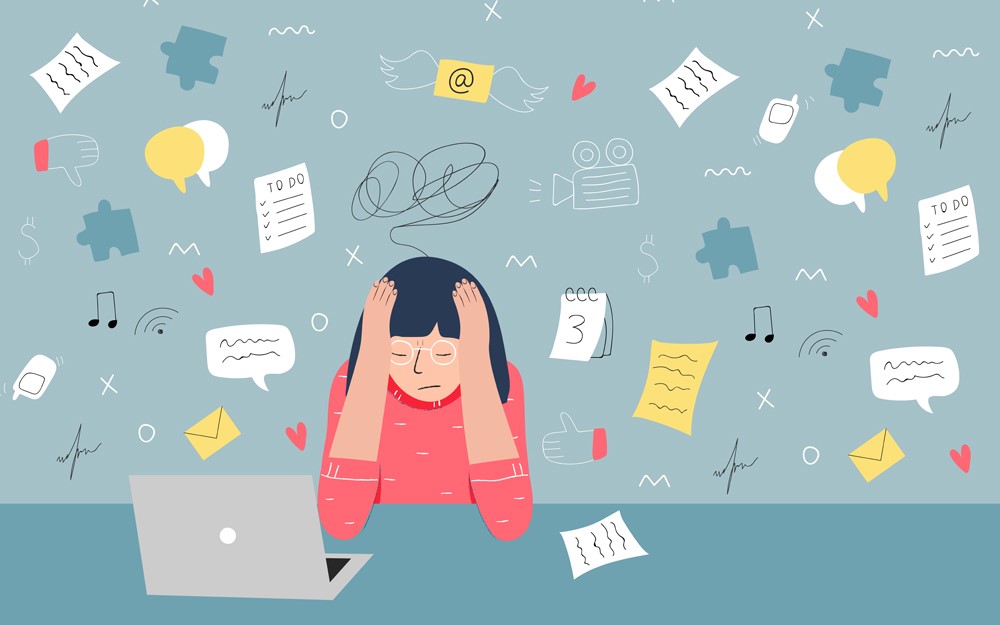
High levels of academic rigor and competition among students are notorious features of MCPS high school education, affecting students’ mental health in various ways. In this piece, two rising senior teens– one MCPS student and one private school student– share their perspectives on academic competition, heightened expectations, and the resulting effects on their mental health.
Nam Dang, class of 2027 student at Richard Montgomery High School, shared his unique experiences as a high schooler in MCPS.
Q.) Would you agree that MCPS students have heightened expectations in terms of academic achievement and course rigor compared to non-MCPS students?
A.) Yes, I generally agree. MCPS is widely known for its extensive Advanced by Placement (AP) and International Baccalaureate (IB) opportunities. When compared to other school districts in the state, or even in the country, MCPS ranks high in its overall curriculum, and receives a considerable amount of funding from the government for teachers, classes, and school infrastructure. There is also a culture in our area that encourages hard work and effort in order to lead a successful life (good college, good-paying job, etc.)
Q.) In your experience being an MCPS student, if at all, what has been the most taxing aspect on your mental health (socially or academically)?
A.) For me, the most taxing part of school is definitely the coursework. As a junior in the IB program, the schoolwork and classwork have been very difficult at times, especially when deadlines overlap. I feel overwhelmed when it comes to the large assignments such as English book essays or History research papers that just keep coming and piling on to the previous one. It becomes a never-ending cycle of work, turn in, work turn in… My method of dealing with it? Procrastination. Avoidance. I put all this work aside to have temporary moments of peace and comfort. But when these deadlines come up, feelings of stress and anxiety are at an all time high. My procrastination only led to a terrible work schedule, contributing to a poor mental health. The worse part is, I would be staying up after hours to complete work, further worsening my mental health by disrupting my sleep schedule. In class, there would be discussions and presentations that gave me severe anxiety (I’ll discuss that later). The heavy course load overall was the most impactful on my mental health.
Q.) Would you be able to share a brief experience that you have had regarding academic or social pressure to succeed within MCPS and how that affected your mental health?
A.) Kind of both academic and social pressure here. At Richard Montgomery—in IB classes in particular—a significant portion of the curriculum involves mandatory socratic seminars and presentations. As I said earlier, I would procrastinate to avoid large assignments such as essays and research papers. However, there is no avoiding these oral assignments. A little background about myself: I despise public speaking. Even when it is in the academic environment. I never enjoyed it and never found myself to be even remotely good at it. As a result, I was forced to step outside my comfort zone when I entered my first socratic seminar in 9th grade IB English. In middle school, class discussions were fun, informal spaces to speak my mind. In high school, it was my worst nightmare. I did not prepare myself well, as my notes on the Odyssey were lackluster, at best. I had one short comment piggybacking off of another students’ insightful contribution that was filled with stutters and surface level analysis. Afterwards, I felt really disappointed in myself. I felt out of place. Everyone carried themselves so well, and spoke with eloquence, while I stammered and stuttered. This would continue through my high school years, making me more and more disappointed in myself. I never was able to celebrate my wins, and beat myself really harshly over my perceived academic failures. I couldn’t see myself succeeding in academics orally, which severely damaged my self-esteem and hope for my future. Anxiety and depression rose out of my disappointment. Looking back, I was in a really bad place mentally, where the main contributors were these class discussions and presentations. It got so severe that I had a serious suicide attempt stemming out of my hopelessness and feelings of failure.
Q.) With the newly introduced “Return to Rigor” policies enacted within MCPS this year, have you noticed any significant shifts in your learning experience? If so, has that had any correlation with your mental health/wellbeing?
A.) In my learning experience: no, not really. The teaching styles of the teachers at Richard Montgomery stayed the same for the most part after the introduction of the ‘Return to Rigor” policies. For me, the most impactful policy implemented was the average semester grade. In my freshman and sophomore years, the policy was that only the letter grade mattered for your semester grade. For example, a first quarter A and a second quarter B would average out to a first semester A. Most of the time, my class grades would be an A and rarely a B, so I was not too worried about my semester grades. I could still be comfortable with bombing a test at the end of the second or fourth quarter because it would still average out to a semester A. However, junior year was different. The rule now is that it would be an average of your number grade, making every assignment in every quarter matter. With the implementation of the new policy, I feel much more pressure to perform well on every All-Task assignment, particularly the large assignments like essays and tests. I have found myself dedicating much more time to studying, raising my stress levels quite significantly. I wouldn’t say I am a perfectionist, but I feel as though I need to get A’s all the time. Hence, I tried hard to maintain semester A’s in all of my classes. School became much more stressful and anxiety-inducing when I felt like I had to do well on every assignment. Staying true to its name, the policy made the coursework much more rigorous, increasing the time I spent on academics and dealing a blow to my free time and mental health.
Q.) If applicable, do you have any ideas as to why MCPS students supposedly experience so much more academic pressure compared to non-MCPS students?
A.) Yes. Everyone knows Montgomery County is a very affluent area. It is important to acknowledge that the wealth of the community plays a key role in how rigorous the school system is. Looking at the demographics of our area, we can see many of the residents are highly educated individuals, and without a doubt want their kids and community to achieve the same success. Many students will say that their parents encourage them to pursue college and a well-paying job. Then, in school, you see other peers performing well, which would naturally compel you to do the same, creating an academically high-achieving school culture that influences every student in one way or another. Additionally, the large range of opportunities from AP to IB classes in the county put much higher stakes on grades; the system repeatedly emphasizes that high school academic performance influences your future, from higher education to career. Coupled with the demographics, MCPS students are pressured to succeed academically due to the “must-do-good’ culture that has been established. Higher levels of academic pressure leads to higher levels of achievement and so, the cycle continues.
Q.) If there were one piece of advice you would give to MCPS students or parents regarding how to face academic pressure, what would it be?
A.) To the students: I would say: take it easy. Yes, school is a fundamental stepping stone for your future. Your parents are going to encourage you to get really good grades. Your teacher will tell you you need to be studying 24/7 for a semester exam. Your friends and classmates will be telling you all types of extracurriculars and internships they are doing. But remember: school is not all academics. School is where you connect with people. School is where you find your best friends. School is your community. I’m not saying to just skip class all the time and walk the hall with your friend group, but rather that your academics are only a part of your experience. Do not let grades define you. You are not a failure or a bad person if you don’t meet academic expectations. There are endless opportunities, so, for real, take it easy. Another piece of advice: learn to fail, and learn to get up. Failing is a main part of life. You will inevitably fail. It is okay to fail. It is okay to not do well compared to other people. Once you learn that failure is inevitable, you are able to take life easier and give yourself some grace. And that goes a long way.
To the parents: let your kid have fun. It’s okay to want the best for them, but don’t let those grades and academics become all they are thinking about. Let your kid grow and experiment, and help guide them in the right directions. Celebrate their successes, and comfort them when they don’t. Respect.
Leah Seji, student at The Academy of The Holy Cross, shared her insight as a non-MCPS student on how her and her peers’ mental wellbeing have been affected by academics.
Q.) If applicable, what impressions have you gathered about MCPS high school students regarding their academics in relation to their mental health?
A.) From what I have heard from MCPS students, school can really affect their mental health but it also depends on how they manage it. Some people burn out really quickly because the classes they take are very rigorous but some people handle school and mental health well because of opportunities that they have like sports and other activities.
Q.) In your experience being a non-MCPS student, do you think that your mental health has been significantly impacted by academic pressure/ rigor implemented at your school?
A.) Yes, my mental health is impacted a lot by academic rigor. I get the feeling of burn out sometimes and there are some days where there can be so much work or so much studying that all I want to do is cry or get the feeling I’m not trying as hard as I should. It gets tough sometimes.
Q.) Within MCPS, there is known to be a lot of competition and expectation to perform exceedingly well academically and go to a top university; would you say that there are comparable expectations at AHC?
A.) Personally I do not think that there is academic competition among peers because I just think people want to focus on doing well themselves without comparison. But honestly I don’t really know if there is competition in academics or I just don’t notice it that often.
- Q) If at all, in what ways would you say that your mental health has been impacted by academic rigor and competition throughout high school?
- A) My mental health hasn’t been impacted drastically by academic rigor and competition in comparison to other people’s mental health conditions but it is now something I prioritize because of how much school asks of you sometimes. Burn out is very real and rigorous classes do not make it easier. Some days it’s hard to find motivation to do anything and other days I am on top of all my work. My mental health has definitely changed because of high school but not in any way that is severely unhealthy.
- Q) Would you share your perspective on how you and your peers manage academic stress and social pressures?
A.) A way I like to manage academic stress is to talk to my parents about what I have going on. I like communicating what I need to get done but also what I feel like is stressing me out. I also like to take time to do the things I like and put school work to the side while focusing on myself. Me and my friends and classmates also like to do brain breaks or scroll on social media to take a break from work or studying.
Q.) If you could share any piece of advice or insight to incoming high school students or their parents regarding mental health in school, what would it be?
A.) I would say definitely put yourself first. School and doing well in classes and getting good grades might be important right now but it’s okay to step back from what is affecting you mentally and take a break. If you feel like you need to be perfect or compete with others it is not worth it if you are not taking care of yourself first.
Regardless of your location, within MCPS or not, high school can be a very mentally arduous time for teens, with new academic and social pressures and challenges arising over the four years. While academics may be important, the most vital thing you can do in high school is to remember to put yourself first. Do not neglect your mental health as you strive to meet your goals; check in with yourself and those close to you to ensure that you don’t get too caught up in striving for perfection. If you or someone you know is feeling mentally overwhelmed or in need of mental health assistance, don’t shy from seeking professional guidance.
Olivia Levinton is a student in the class of 2027 at Poolesville High School who plans to study Journalism and eventually pursue written reporting professionally.

It's not an easy time to be a kid. Perhaps it never is, but now it's especially true. Let us help you understand and support your child's needs.

Is your teen struggling with school, in their relationships with friends, with you? Do they seem irritable, withdrawn, unmotivated, sad? Our therapist know how to help.

Are you looking to make some aspect of your otherwise good relationship better? Maybe you’ve tried all the strategies that make sense to you.