Muse™, Meditation Made Easier
Is Muse Meditation Right for You?
Did you know that emotional dysregulation is at the core of many psychiatric and relationship problems? Did you know meditation is an effective method for taming our emotional storms?
Have you struggled with staying calm or focused? Have you thought about meditation but didn’t know where to start?
Have you tried meditation but never felt like you were “doing it right?” Are you looking for something that would make meditation easier?
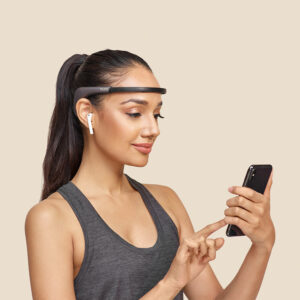
If this sounds like you, the Muse could provide the help for which you are looking. The Muse is a non-medication-based treatment device that uses compact electroencephalogram (EEG) technology and biofeedback data to monitor and record brainwaves. It then produces easy-to-read charts and graphs, allowing users to track their progress. Utilizing Bluetooth technology and a paired phone app (available in the App Store and the Google Play Store), Muse categorizes and reports brain signals into three types: active, neutral, and calm. Translating these signals into the sounds of weather, users will hear heavy rainfall when their mind is in an active state and the chirping of birds when their mind reaches a calm state. When combined with talk therapy, meditation’s benefits can dramatically increase your psychotherapy sessions’ effectiveness.
Kentlands Psychotherapy is proud to offer treatment services that incorporate this technology. We have been very pleased with our patients’ results and would be happy to discuss the possible appropriateness of incorporating this treatment modality into your care.
 How does Muse work?
Muse uses 7 EEG brain sensors to detect your brainwaves: 2 on the forehead, two behind the ears, and three reference sensors. The fully certified and risk-free device does not stimulate electrical activity. It passively reads brain waves to provide the user with real-time biofeedback. The Muse website details some of the science behind the reading of brain waves:
“Muse detects a range of brain electrical activity and transforms it into easily understandable experiences. The Muse app transforms raw brain signals into many different components – noise, oscillations, non-periodic characteristics, and transient and event-related brain events. Signal processing and machine learning techniques are applied to the brain signal components to control the experience in real-time” (2018).

Using this state-of-the-art technology, Muse can train beginning and intermediate meditators to finely hone their focus by optimizing breathing and relaxation techniques.
What research has been conducted?
Muse has been used internationally by researchers, developers, neuroscientists, and health professionals to understand brain health and function better. The Muse technology has been used in multitudinous research studies, including those of NASA, the Mayo Clinic, UCL, MIT, and many more. This groundbreaking research has correlated the use of the Muse device with increased grey matter density, reduced thinning of the prefrontal cortex, decreased amygdala activity (associated with stress response), and increased resilience. A 2018 study by the Catholic University of Milan found that users of Muse experienced a 16% reduction in stress, improved mental performance and reaction times, and changes in resting brain states, similar to those of mindfulness meditators, all in just four weeks!

It's not an easy time to be a kid. Perhaps it never is, but now it's especially true. Let us help you understand and support your child's needs.

Is your teen struggling with school, in their relationships with friends, with you? Do they seem irritable, withdrawn, unmotivated, sad? Our therapist know how to help.

Are you looking to make some aspect of your otherwise good relationship better? Maybe you’ve tried all the strategies that make sense to you.