
What Plate-Stacking Says About Me
Spoiler: It’s Probably Not What It Says About You!

Recently, I stumbled on a clickbait article from geediting.com. Psychology says people who stack their dishes neatly for the server at restaurants have these 7 unique traits that set them apart. What fun! I’m a restaurant plate stacker. Let’s see what “Psychology” this has to say about me.
Apparently, I have “consideration for others”, “gratitude and humility “, and “respect for service workers.” Really? . . . Go on.
Like a horoscope, it was vague enough to be universal yet specific enough to feel personal. I have “organizational skills” and “attention to detail,” and I demonstrate a habit of “mindfulness.” Who wouldn’t want to have these qualities and who doesn’t see them in themselves, at least at times?
Why We Read These Articles
We’re all hungry to understand ourselves. Perhaps that’s why these articles are so ubiquitous. The formula Psychology tells us that your benign behavior habit, such as backing into parking spaces, tells us you have these five personality traits. Of course, the “traits” it claims we have are always aspirational; we feel seen, validated, and are excited to share the article with others, click, click, click. Repost.
But how might an actual clinical psychologist interpret this behavior when looking inward? I volunteer as tribute. What does plate-stacking actually reveal about me?
I tend to like things “just so”. I like it when people take off their shoes when they come to my home, and I use foam dividers between my dinner plates to stop the top surface from getting scratched. I’m the only one at the house allowed to load the dishwasher, because no one else does it “right”—obviously. Do I meet the criteria for OCD? No. Am I fussy? Persnickety? A bit controlling? Yes.
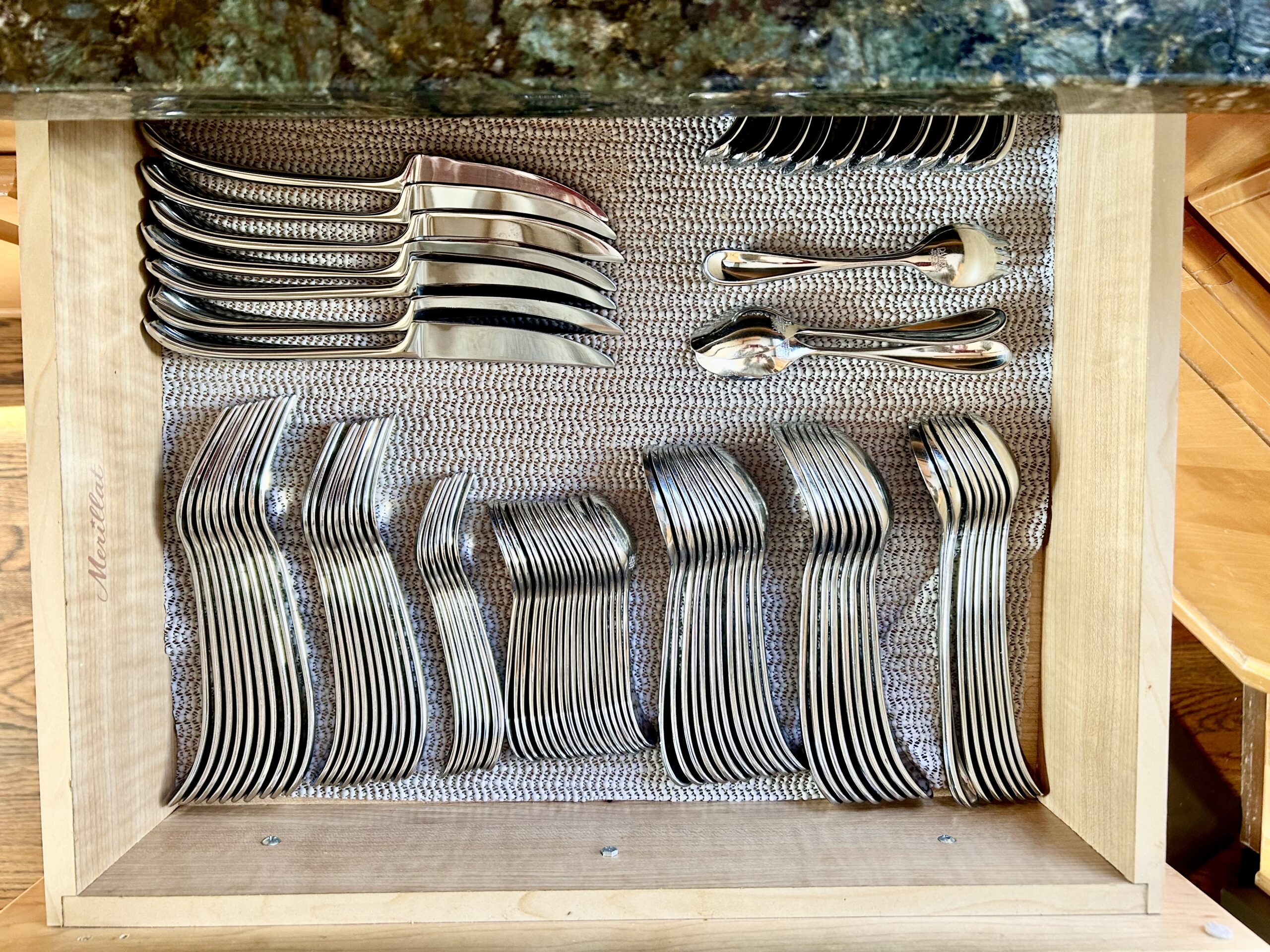
Exhibit A: My silverware drawer
When dirty dishes linger at the table, I start to feel distracted by their presence. I’m not in a hurry to leave. I’d like to enjoy the remainder of the meal, talking over a cleaned-off table. I have a strong internal locus of control. If something in myself or my environment could stand to be improved, I’m on it. Some friends and family might legitimately argue that I can be a little bit too controlling at times.
Have wait staff thanked me for stacking? Often. Does that mean I’m doing it from ‘gratitude, humility, and respect’? Let’s be honest, that’s a nice side benefit, but I’m doing it because I want those plates gone.
I don’t meet diagnostic criteria for ADHD either, but I do struggle to fully attend to dinner conversation if I’m distracted and bothered by dirty dishes. I tend to have diffused attention in busy environments, situational awareness, you might say. Quite the opposite of what we think of when we say someone is “mindful” and fully present in the moment.
Why These Articles Work
These articles work because they’re flattering. They tell us our quirks are actually signs of psychological superiority. But the truth is usually less impressive and more interesting.
In truth, we’re all just people trying to manage our lives in ways that work for us, navigating dirty dishes, parking spots, and misaligned silverware. Other plate stackers may be motivated by dependent personality traits, a fawning trauma response, people-pleasing tendencies, or genuine kindness and generosity. What I know is that we can’t tell from a single behavioral habit the fundamental aspects of a person’s personality.
The next time you’re about to click one of these, pause and ask yourself: What would an honest version say about me? That moment of self-reflection is worth more than seven made-up traits designed to make you feel special enough to share.

It's not an easy time to be a kid. Perhaps it never is, but now it's especially true. Let us help you understand and support your child's needs.

Is your teen struggling with school, in their relationships with friends, with you? Do they seem irritable, withdrawn, unmotivated, sad? Our therapist know how to help.

Are you looking to make some aspect of your otherwise good relationship better? Maybe you’ve tried all the strategies that make sense to you.