
Can ChatGPT Be My Therapist?
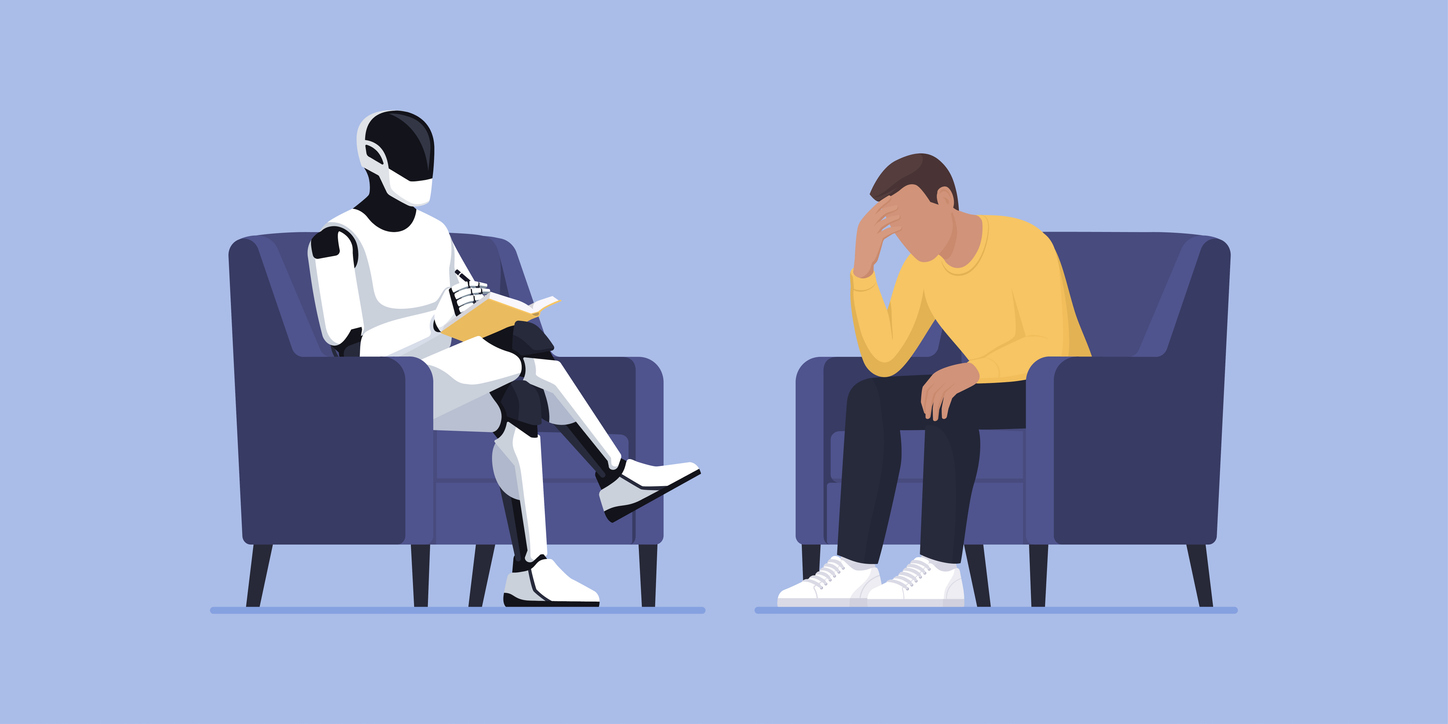
Psychologists and other mental health professionals are deep in the weeds debating the differences between people using an AI tool for something akin to therapy and engaging in traditional psychotherapy with a trained and licensed human. From my perspective, we’re driving this debate from two disparate agendas. One is the need to protect the public. The other is the need to defend one’s profession and market share. Because the latter is so personal and critical to the authors, the former becomes vulnerable to accusations of conflict of interest. I think it’s both/and. The distinction between AI and psychotherapy matters not only for professional survival but also for patient success, safety, and well-being.
Relationships Matter
Here’s why: the core of therapy is a relationship that is impactful and enduring in a way that current AI interactions cannot be. When we sit with a therapist, we care what they think of us. We have emotional reactions to what they say. Their words stay with us long after the conversation ends, echoing and shaping our decisions. That’s part of why therapy works. While AI can sound supportive, it cannot truly empathize or build a bond that motivates change. And, as early users, most of us already know that to be true.
There is also the question of the therapist’s emotional attunement and how we use it in sessions. To do this, we must be able to hear the intonation of their voice, see their body language and facial expressions, and infer what they are not saying that we would otherwise expect. We then compare all of this to our human reactions.
“Sometimes in therapy, I’ll notice and name my emotional reaction when my client tells a story of devastating loss without showing sadness, or a betrayal without anger. By sharing my felt response, I can help the client recognize what they themselves may be avoiding or numbing. In this way, I lend my emotions until they can safely reconnect with their own.” – Kentlands Psychotherapy Therapist
Expertise, Context, and Continuity
Therapists also provide something vital that AI cannot: the ability to assess, diagnose, and treat within established clinical frameworks. When I meet with someone, I rely on years of training along with professional and legal standards that guide my care. AI cannot make formal diagnoses or develop treatment plans. Nor can it be held responsible in the same way as licensed clinicians, who are bound by ethical codes, licensing boards, and laws meant to protect patients.
Context is another crucial difference. A therapist listens not only to words but to tone, history, body language, and the subtle cues that reveal deeper emotional layers. AI has access only to the input it is given. Without the richness of human context, it can miss what matters most. It does see the tension in the room between a teen and their parent at intake, it cannot infer what is unspoken in a session, or gently play the role of “devil’s advocate” when warranted.
Moreover, AI doesn’t follow up on or address topics we avoid or homework that has been overlooked. It won’t ask us how we have been doing since our cat died. The lack of continuity between interactions removes accountability for both the therapist and the client, a key component of effective care.
Crisis Response
In moments of crisis, these limitations become even clearer. Suppose someone expresses a plan to hurt themselves or someone else, or is otherwise in immediate danger. In that case, I am both able and required to use my best judgment to intervene, ensure safety, coordinate emergency care, or develop a crisis plan. AI cannot take real-time action to save a life. If possible in the future, who will be responsible for programming the algorithm to ensure that those decisions are neither over- nor under-reactions? Do we can’t have an algorithm calling 911 on people? Do we want ChatGPT completing commitment paperwork on users?
Bespoke Accountability
Moreover, the work of therapy also involves personalization. With each client, therapists tailor their approach to reflect the client’s specific goals, strengths, and struggles. We measure progress, adapt techniques, and build a path forward together. AI can provide generic coping strategies, but it cannot craft or adjust an evolving plan rooted in nuanced clinical judgment and expertise. It is designed to take the user’s lead and respond, not to develop, plan, and guide a process that needs to stay on course. If a user has shiny object syndrome, AI will follow us down every rabbit hole, leaving a trail of unfinished business in its wake. Additionally, no topic is ever deemed resolved, as continued engagement is the ultimate goal. So, the inappropriate beating of dead horses is likely.
Confidentiality
Confidentiality is another area where the difference is profound. Conversations with a licensed therapist are legally protected under strict privilege and privacy rules. Interactions with AI are not covered by those same safeguards, leaving users without the same assurances of confidentiality.
The Human Factor
Ideally, therapy is not a one-way stream of unconditional support. It is a relationship where we can acknowledge misunderstandings, work together to repair trust, and both grow from those moments of rupture and repair. That emotional depth is uniquely human. These safe therapeutic spaces can be a proving ground for practicing vulnerability in relationships. Later, those skills can then be transferred to riskier, outside relationships with more unpredictable and flawed individuals. AI cannot share in that process, nor can it evolve alongside a client in the same way. When confronted too aggressively or unfairly by a user, AI demurs and apologizes as it has been trained to do. By doing so, the user loses an opportunity to learn about how they contribute to their own rupture and repair cycles in relationships.
To that end, Anthropic (the Claude chatbot developers) is introducing the ability of their chatbot to terminate conversations that become repetitively abusive. This welcome advancement underscores the importance of setting appropriate boundaries through clear limit-setting protocols, something we should all be doing in our relationships with others. It also has the potential to provide behavioral extinction training for chronically abusive human users through planned ignoring (ABA), resulting in, we hope, an impactful response cost of the termination of the chat conversation, e.g., the human equivilant of “I’m not going to engage with you if you keep talking to me that way.”
In the end…
The tension inherent in a relationship with another human being is also what keeps it interesting and us engaged. Without it, we quickly become bored and disengaged. For all these reasons, while AI can be a helpful tool, it is not a substitute for psychotherapy. Therapy is not just about information or advice. It is about connection, accountability, the resonance of human relationships, and the transformative power of presence. That difference is more than technical; it is what makes healing possible.

Dr. Elizabeth Carr is the founder of Kentlands Psychotherapy. In her current leadership role, she enjoys writing about the mental health sector, the current state of affairs, and the industry’s future direction. Visit our podcast appearance page to hear more about her thoughts on these issues and follow her on LinkedIn to join the conversation.

It's not an easy time to be a kid. Perhaps it never is, but now it's especially true. Let us help you understand and support your child's needs.

Is your teen struggling with school, in their relationships with friends, with you? Do they seem irritable, withdrawn, unmotivated, sad? Our therapist know how to help.

Are you looking to make some aspect of your otherwise good relationship better? Maybe you’ve tried all the strategies that make sense to you.